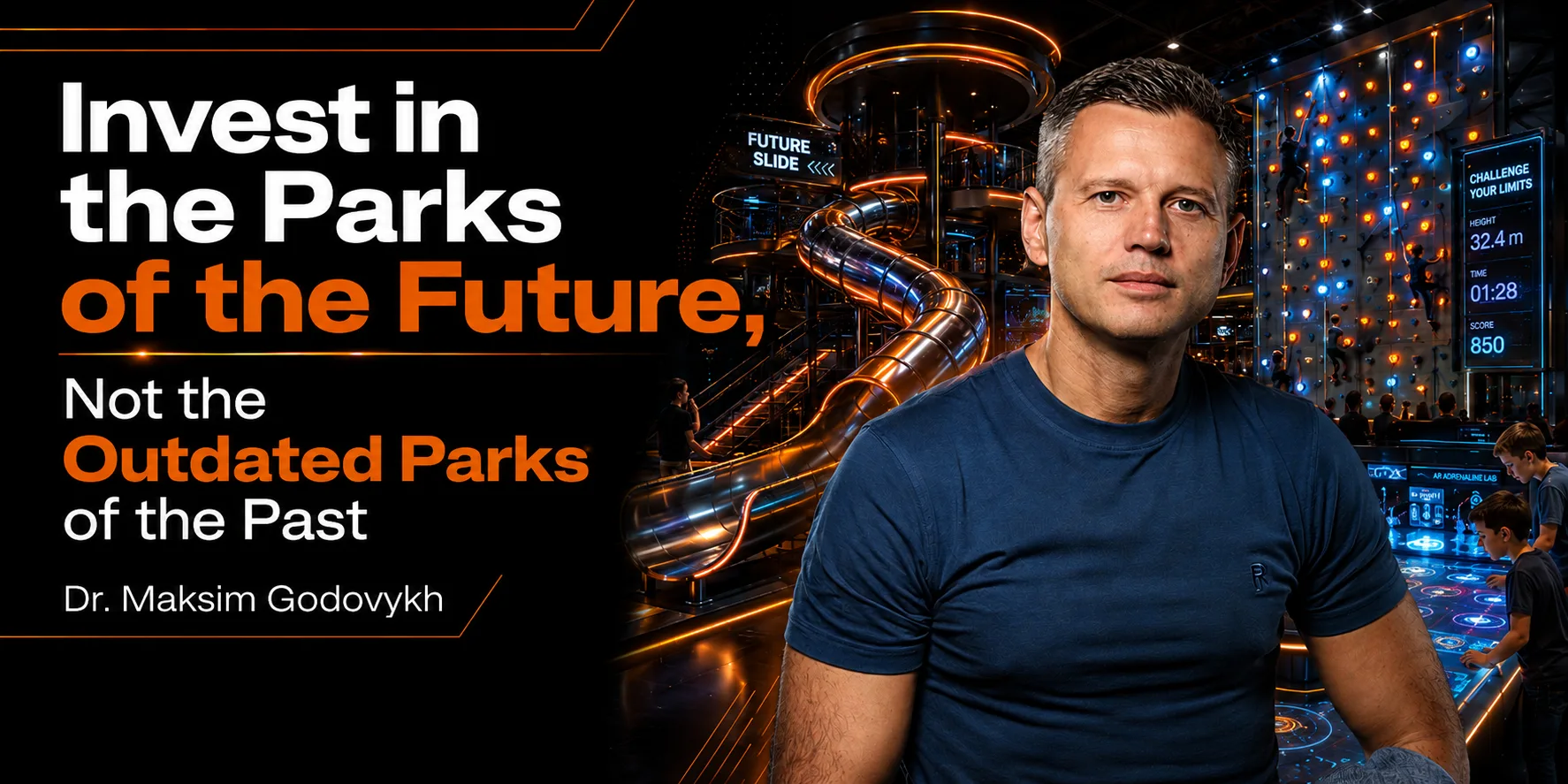
Invest in the Parks of the Future, Not the Outdated Parks of the Past
Over the past year, we have explored the gaps and limitations of today's family entertainment and activity parks, interviewed families, analyzed research, and even published a book. Through this work, we have developed a clearer vision of what the family parks of the future could look like.
In brief:
1. Novelty Decay and Attraction Fatigue Children experience novelty decay and attraction fatigue. After two or three visits, many children no longer want to return to the same park. As a result, we often see visitation decline several months after opening.
2. Lack of Personalization and Progression There is a lack of personalization and progression. Every child is typically offered the same experience, even though visitors differ in age, interests, skills, personalities, and previous park experiences. Activities and challenges should be adapted to each individual visitor.
3. Parents Are Often Bored Parents are often bored while waiting and receive little value from their own visits. This negatively affects loyalty, revisit intentions, willingness to pay more, willingness to recommend the park, and many other important outcomes.
4. Limited Developmental Value Many attractions provide entertainment but offer limited visible intellectual, creative, emotional, or social development. At the same time, one of the main concerns expressed by parents in our interviews was how to help their children develop and prepare for college and future life—not simply how to entertain them.
5. Programming Deficit There is a recurring programming deficit. Parks often rely primarily on open play and birthday parties rather than maintaining a calendar of changing programs. Most parks lack a continuous rhythm of competitions, events, fairs, festivals, exhibitions, and themed days that can serve as important anchors for new and returning visitors and members.
6. Incoherent Park Layout The typical park layout is designed to maximize the number of attractions rather than create a coherent customer journey, as we see in more advanced theme parks. Play zones can feel like separate collections of unrelated attractions, without meaningful transitions, narrative, purpose, or continuity between areas.
7. Underutilized Technology In the age of advanced technology and AI, park technology is still often limited to arcade games, video displays, and basic interactive screens. These technologies frequently lack depth, repeatability, personalization, and integration with the broader experience. Actions completed in one area of the park rarely influence a visitor's wider journey.
8. Staffing Challenges Many employees lack sufficient training in education, hospitality, technology, performance, event management, and even basic sales skills. We know that the perceived quality of a visit—for both children and parents—depends heavily on interactions with employees, and these interactions do not always influence the experience positively.
I believe I can stop here. You can find the full list of 128 gaps and limitations in our FEC Gap Taxonomy.
This is the perfect time not merely to add new attractions or replicate the same park models we created many years ago, but to overcome these structural limitations.
We now have an opportunity to use scientific insights, emerging technologies, AI-powered solutions, new resources, and other innovations to develop something fundamentally better:
- Parks that provide a new experience with every visit.
- Parks whose attractions grow together with their visitors.
- Parks that support every dimension of children's development.
- Parks that meaningfully engage parents and caregivers.
- Parks that extend beyond their physical locations to become holistic ecosystems.
- And parks that implement the advances we have recently achieved in technology, education, entertainment, and experience design—but, for some reason, have not yet fully incorporated into family entertainment concepts.
*By Dr. Maksim Godovykh*